Ant vs Termite: How to Tell the Difference
By United Pest Editorial Team, Pest Management Specialist
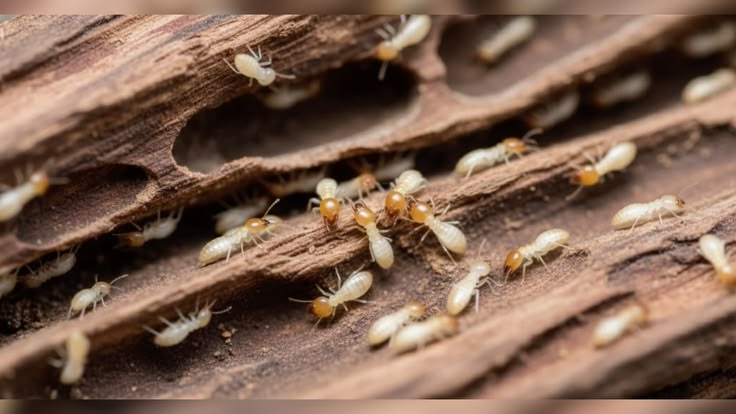
Ants have a narrow pinched waist, elbowed antennae and front wings longer than the hind pair. Termites have a straight body with no waist, straight bead-like antennae and four wings of equal length. Termites are pale cream; most household ants are darker. The distinction matters because only termites eat structural timber.
In Singapore's climate both insects are active year-round and both swarm after heavy rain, so the two are confused constantly. Getting it right is not academic: an ant problem is a hygiene nuisance, while a subterranean termite problem is structural damage that compounds every month it goes untreated.
| Feature | Ant | Termite |
|---|---|---|
| Waist | Narrow, clearly pinched between thorax and abdomen | Straight and broad — no visible waist |
| Antennae | Elbowed, bent at a distinct angle | Straight, beaded like a tiny string of pearls |
| Colour | Usually black, dark brown or reddish | Pale cream, translucent white or light brown |
| Wings (when present) | Front pair longer than hind pair, tough and veined | Four wings of equal length, milky and easily shed |
| Body texture | Hard, glossy exoskeleton | Soft, matte body that dries out in open air |
| Movement | Marches in open visible trails | Avoids light; travels inside mud tubes or timber |
| Diet | Sugar, grease, protein, food waste | Cellulose — structural timber, skirting, paper, cardboard |
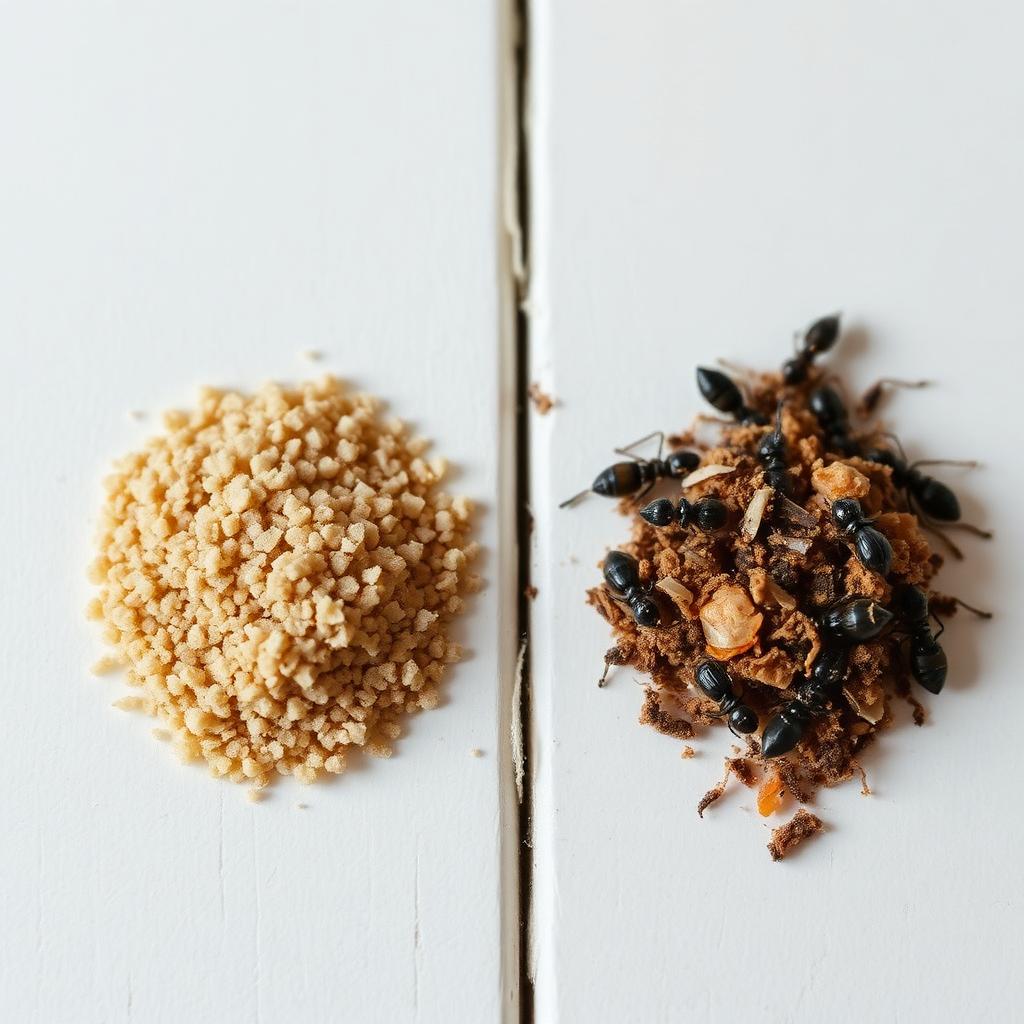
| Debris left behind | Mixed sawdust with insect parts (carpenter ants) | Uniform six-sided frass pellets, or mud tubes |
| Damage risk | Contamination and nuisance | Structural — door frames, joists, parquet, skirting |
The three-second field check
Look at the insect in this order and you will almost never be wrong:
- Waist. Pinched like a wasp means ant. Straight like a grain of rice means termite.
- Antennae. Bent at an elbow means ant. Straight and beaded means termite.
- Wings. Two different lengths means ant. Four identical wings means termite.
A phone camera in macro mode is enough to see all three at 3–5 mm body size. If the insect is too damaged to judge, the surrounding evidence usually settles it.
Evidence in the building tells you more than the insect
Signs it is termites
- Pencil-width mud tubes running up walls, pillars, cable trunking or the underside of skirting
- Skirting or door frames that sound hollow when tapped but look intact on the surface
- Blistered or rippled paint over timber
- Neat piles of uniform pellet frass under furniture or window frames (drywood species)
- Discarded wings in equal-length pairs collected on window sills after rain
Signs it is ants
- Continuous visible trails along worktops, tile grout and wall-to-ceiling joints
- Activity focused on sugar, drink spills, pet food or grease rather than timber
- Small soil mounds at floor cracks or planter edges
- Rough, mixed sawdust with insect body parts where carpenter ants are excavating
Our frass identification guide covers the debris comparison in detail, and the pest identifier walks you through the same logic question by question.
Why the wrong call is expensive
Treating termites as ants is the most common and most costly mistake we see in Singapore homes. Ant gels and surface sprays do nothing to a subterranean colony living in soil under the slab; the colony keeps feeding while the owner believes the problem is handled. By the time flooring lifts or a door frame collapses, remediation typically costs several times the original treatment.
Termite work needs soil treatment, baiting or both, sized to the structure — see termite control, or subterranean termites for the species that causes most Singapore damage. For genuine ant problems, ant control targets the nest through non-repellent baiting rather than killing foragers on the surface.
What to do next
Photograph the insect and any mud tubes or frass, leave the evidence in place, and book a free inspection. Our technicians confirm the species on site with a moisture meter and probe before quoting. Call 9222 2278 or start with the pest identifier.