The Complete Pest Prevention Checklist for Singapore Restaurants
By United Pest Editorial Team, Pest Management Specialist
Running a restaurant in Singapore means operating under some of the strictest food hygiene regulations in the world. The National Environment Agency (NEA) requires every food and beverage establishment to maintain pest-free premises — and failure to do so can result in fines, demerit points, or licence suspension. This comprehensive pest prevention checklist is designed to help Singapore restaurant owners maintain compliance and protect their customers, staff, and reputation.
Why Pest Prevention Matters for Singapore Restaurants
Restaurant pest control in Singapore is not merely a best practice — it is a legal obligation. Pests such as cockroaches, rodents, and flies can contaminate food, spread diseases, and trigger costly shutdowns. A single pest sighting during an NEA inspection can result in immediate corrective action requirements. Prevention is always more cost-effective than remediation.
💡 Did You Know?
According to NEA, food establishments that fail hygiene inspections — including pest-related violations — can accumulate demerit points that lead to licence suspension after reaching 12 points within 12 months.
Daily Pest Prevention Checklist
Kitchen and Food Preparation Areas
- Wipe down all work surfaces, countertops, and equipment after every service
- Sweep and mop kitchen floors, paying special attention to corners and under equipment
- Empty grease traps and clean grease filters daily
- Store all food items in sealed, airtight containers — never leave food exposed overnight
- Clean drains thoroughly to prevent drain fly breeding
- Remove all food scraps and spillages immediately
Waste Management
- Dispose of waste in sealed bags and place in covered bins
- Empty all bins before closing — never leave waste overnight inside the premises
- Clean waste bins and surrounding areas daily to remove residue and odours
- Ensure external waste collection areas are clean and well-maintained
Dining Area
- Clear and clean tables promptly after each customer
- Vacuum or sweep dining floor at the end of every shift
- Inspect upholstered seating for signs of bed bugs or other pests
Weekly Pest Prevention Tasks
- Deep clean behind and under all kitchen equipment — ovens, refrigerators, shelving units
- Inspect and clean exhaust hoods and ventilation systems
- Check all door seals, window screens, and entry points for damage or gaps
- Inspect storage rooms for signs of rodent droppings, gnaw marks, or ant trails
- Review and rotate stock using FIFO (first in, first out) to prevent expired items from attracting pests
- Clean floor drains with enzyme-based cleaners to prevent organic build-up
💡 Did You Know?
German cockroaches — the most common species in Singapore commercial kitchens — can reproduce so rapidly that a single pair can produce over 400 offspring in a year. Weekly inspections help catch early signs before populations explode.
Monthly Pest Prevention Measures
- Schedule professional cockroach control treatments including gel baiting in cracks and crevices
- Install and monitor monitoring traps in key areas — behind equipment, near drains, and along walls
- Conduct a thorough structural inspection for cracks, holes, and gaps that pests could exploit
- Review pest control service reports and discuss trends with your pest management provider
- Ensure all pest control documentation is filed and accessible for NEA audits
Structural Prevention — Sealing Your Restaurant
Many restaurant pest problems in Singapore originate from structural vulnerabilities. Rats can squeeze through gaps as small as 2 centimetres, and cockroaches can enter through cracks barely 1.5 millimetres wide. Key structural measures include:
- Seal all gaps around pipes, conduits, and utility lines entering the premises
- Install door sweeps on all external doors and loading dock entrances
- Repair or replace damaged window screens and ventilation grilles
- Use silicone sealant to close gaps around skirting boards, wall junctions, and tiling
- Ensure ceiling tiles are intact with no gaps — a common entry point for roof rats
Staff Training and Awareness
Your staff are the first line of defence against pests. Every team member should understand:
- How to identify common pests and signs of infestation (droppings, egg cases, gnaw marks)
- Proper food storage procedures and FIFO rotation
- The importance of reporting pest sightings immediately to management
- Correct waste handling and disposal procedures
- Personal hygiene standards that minimise pest attraction
NEA Compliance Documentation
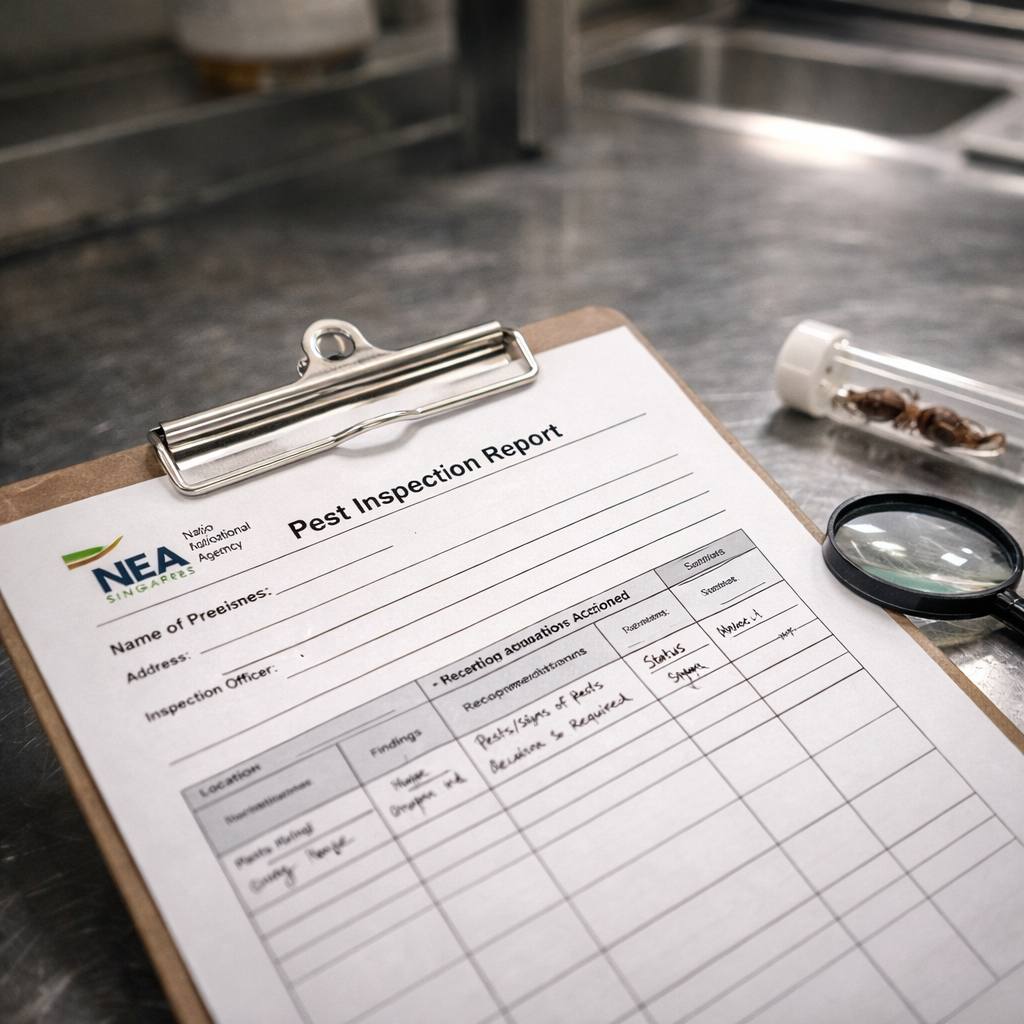
Maintaining proper records is essential for NEA pest control compliance. Ensure you have:
- A valid pest control service agreement with a licensed operator
- Monthly service reports detailing treatments applied, pests found, and recommendations
- Monitoring trap records showing pest activity trends over time
- Evidence of corrective actions taken following any pest sighting or failed inspection
- Staff training records for food hygiene and pest awareness
Partner with Professional Pest Control
A robust pest prevention programme requires professional expertise. At United Pest & Vector Management, we specialise in commercial pest control for Singapore's F&B industry. Our certified technicians provide comprehensive treatments including residual spraying, gel baiting, and monitoring trap systems — all documented for NEA compliance.
Book a Free Inspection Today — Call 92222278