How to Prepare Your Business for an Unexpected NEA Inspection
By United Pest Editorial Team, Pest Management Specialist
NEA pest inspections in Singapore are often unannounced. For food and beverage businesses, commercial kitchens, and any premises handling food, an unexpected visit from an NEA inspector can determine whether your business continues operating — or faces penalties. The key to passing every inspection is not last-minute preparation, but year-round compliance through systematic pest management and proper documentation.
Understanding NEA Pest Control Requirements
The National Environment Agency enforces strict hygiene and pest control standards for businesses in Singapore, particularly those in the food industry. NEA pest control requirements include:
- Engagement of a licensed pest control operator with a valid Vector Control Operator licence
- Regular professional pest control treatments — monthly for F&B premises
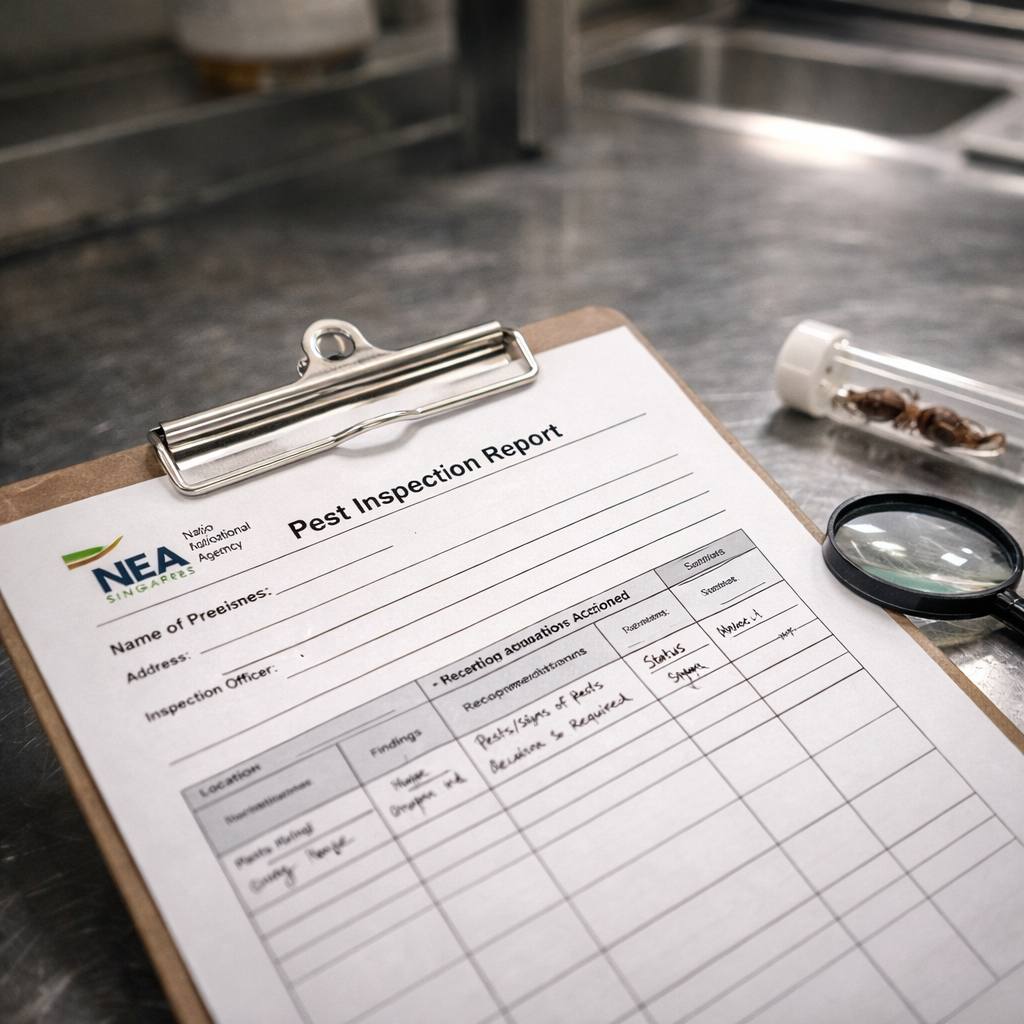
- Proper documentation of all pest control activities, findings, and corrective actions
- Maintenance of clean, pest-free premises at all times
- Elimination of conditions that attract or harbour pests
💡 Did You Know?
NEA can impose fines of up to S$5,000 for first-time offenders found with pest infestations, and higher penalties for repeat violations. The demerit point system can lead to licence suspension at just 12 points within 12 months.
Year-Round Readiness Checklist
1. Maintain a Valid Pest Control Service Agreement
Ensure your business has a current service agreement with a licensed pest control provider. The agreement should specify treatment frequency, coverage areas, pest types targeted, and documentation deliverables. At United Pest & Vector Management, we provide HACCP-compliant service agreements tailored for Singapore's regulatory environment.
2. Keep All Documentation Accessible
NEA inspectors will ask to see your pest control records. Maintain organised files containing:
- Pest control service reports for the past 12 months minimum
- Monitoring trap records and trend analysis
- Corrective action reports for any pest sightings or issues
- Your pest control operator's NEA licence documentation
- Staff training records for food hygiene and pest awareness
3. Conduct Regular Self-Inspections
Do not wait for your monthly pest control visit to check your premises. Assign a manager to conduct weekly internal inspections covering:
- Kitchen areas — behind and under equipment, inside cupboards, near drains
- Storage rooms — check for droppings, gnaw marks, damaged packaging
- Waste areas — ensure bins are clean, sealed, and emptied daily
- Entry points — doors, windows, pipe entries, ventilation grilles
- Dining areas — check for food debris and spills
4. Address Structural Vulnerabilities
Seal all potential pest entry points proactively. Common vulnerabilities include:
- Gaps around plumbing pipes entering walls or floors
- Damaged or missing door sweeps
- Broken window screens or ventilation covers
- Cracks in walls, flooring, or tiling
- Unsealed cable entry points
5. Maintain Exemplary Hygiene Standards
Cleanliness is the foundation of pest prevention. Ensure:
- All food is stored in sealed containers, elevated off the floor
- Work surfaces are cleaned after every use
- Drains are cleaned regularly to prevent drain fly and cockroach breeding
- Grease traps are emptied and cleaned on schedule
- Staff follow proper waste handling procedures
💡 Did You Know?
NEA inspectors often focus on areas that businesses overlook — behind heavy equipment, underneath sinks, inside floor drain covers, and in staff changing rooms. These are exactly the areas where pests establish hidden harbourage.
Common Mistakes That Lead to Failed Inspections
- Outdated pest control records: Failing to file monthly service reports or having gaps in documentation
- Unlicensed pest control providers: Using operators without valid NEA Vector Control licences
- Reactive instead of preventive: Only calling pest control after a sighting rather than maintaining regular treatments
- Poor waste management: Overflowing bins, exposed food waste, or irregular collection
- Ignoring minor signs: Dismissing a few cockroach droppings or a single rodent sighting instead of investigating
How Professional Pest Control Ensures Compliance
Partnering with a professional commercial pest control provider in Singapore ensures continuous compliance. United Pest & Vector Management provides:
- Monthly treatments with gel baiting, residual spraying, and targeted applications
- Comprehensive service reports with findings, treatments applied, and recommendations
- Monitoring trap installations with regular data analysis
- Rapid response for any pest sighting between scheduled visits
- Full documentation package ready for NEA audit
Book a Free Inspection Today — Call 92222278