What Happens During an NEA Pest Inspection in Singapore?
By United Pest Editorial Team, Pest Management Specialist
For food and beverage operators, property managers, and business owners in Singapore, an NEA (National Environment Agency) pest inspection can be a stressful event. Understanding exactly what happens during an inspection — what the officers check, what documentation they require, and what triggers violations — removes the uncertainty and allows you to prepare effectively. This guide walks you through the entire NEA pest inspection process.
Who Gets Inspected?
NEA conducts pest-related inspections across various property types in Singapore:
- Food establishments — restaurants, hawker stalls, food courts, cafés, bakeries, and catering kitchens
- Hotels and hospitality — guest rooms, kitchens, laundry areas, and waste storage
- Construction sites — temporary worker quarters and site offices
- Residential estates — common areas, bin centres, and void decks
- Commercial buildings — offices, retail spaces, and industrial premises
F&B establishments receive the most frequent and thorough inspections due to the direct link between food safety and pest management.
What NEA Inspectors Check
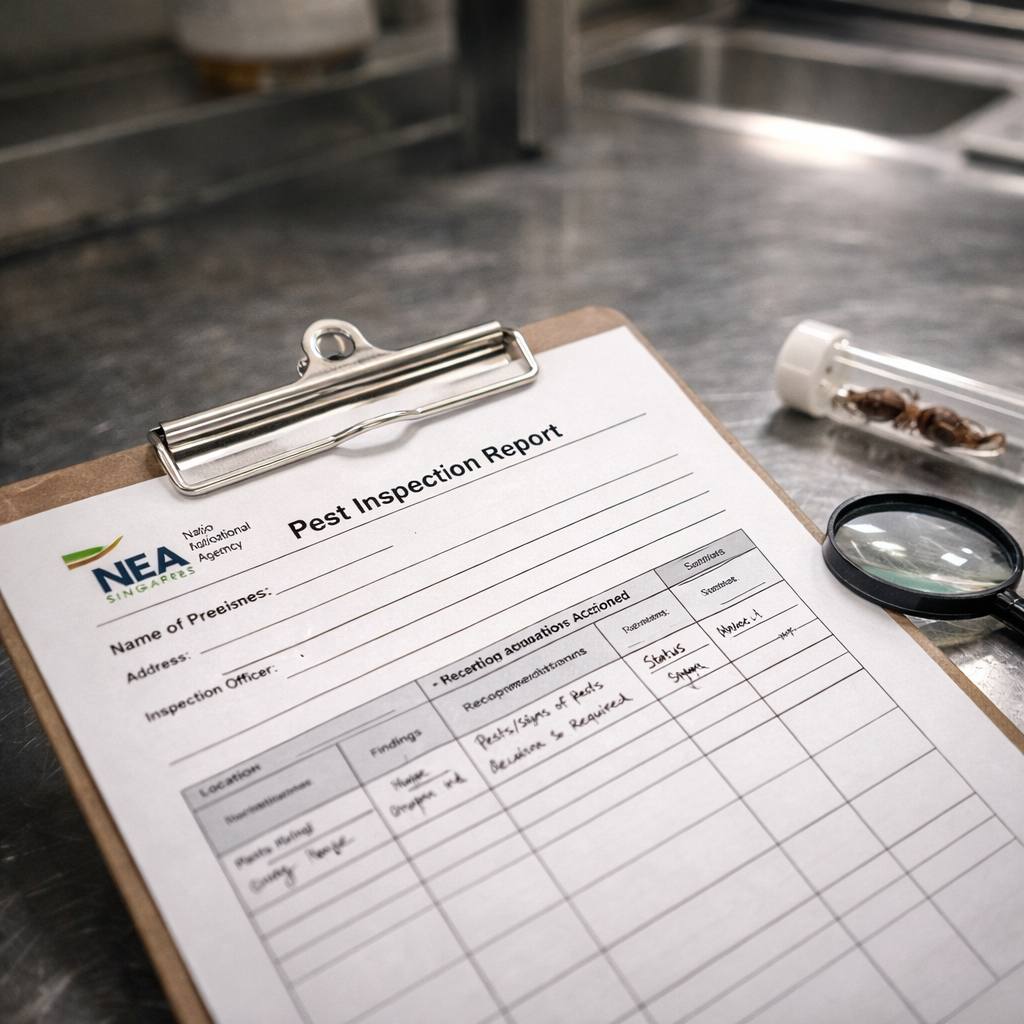
An NEA pest inspection is systematic and thorough. Inspectors typically examine the following areas and aspects:
1. Evidence of Pest Activity
Inspectors actively look for signs of cockroach, rodent, and fly activity throughout the premises:
- Cockroach droppings, egg cases, and shed skins
- Rodent droppings, gnaw marks, and rub marks
- Fly breeding sites and larvae in drains
- Live pest sightings in any area
💡 Did You Know?
NEA inspectors use torches to check hidden areas behind equipment, under counters, and inside ceiling voids. They are trained to identify pest evidence that untrained eyes would miss.
2. Mosquito Breeding Habitats
Singapore takes mosquito breeding extremely seriously due to the ongoing dengue threat. Inspectors check for stagnant water in:
- Flower pot saucers and ornamental water features
- Roof gutters and air-conditioning drip trays
- Discarded containers, tyres, and equipment
- Floor traps and drains with inadequate water flow
- Construction site trenches and depressions
Fines for mosquito breeding start at $200 and can reach $5,000 for first-time offenders, with higher penalties for repeat violations.
3. Food Hygiene and Storage Practices
For F&B premises, inspectors assess how food storage and handling practices contribute to pest attraction:
- Whether food is stored in sealed containers and off the floor
- Cleanliness of food preparation surfaces and equipment
- Condition and cleanliness of storage rooms
- Whether raw and cooked foods are properly separated
4. Structural Maintenance and Proofing
Inspectors evaluate the building's physical defences against pests:
- Condition of door seals and self-closing mechanisms
- Window screens and their integrity
- Gaps around pipes and utility penetrations
- Condition of drain covers and floor traps
- Wall and ceiling integrity — cracks, holes, and gaps
5. Pest Control Documentation
A critical part of any NEA inspection is reviewing your pest management records:
- Contract with a licensed pest control operator
- Service visit reports with treatment details
- Monitoring trap records and trend analysis
- Corrective action reports for any pest issues found
- Pest control operator's NEA licence details
💡 Did You Know?
NEA requires all pest control operators in Singapore to hold a valid Vector Control Operator (VCO) or Vector Control Technician (VCT) licence. Always verify your pest control company's credentials before engaging their services.
The Demerit Point System
Singapore's food hygiene demerit point system directly affects your food shop licence:
- 0–11 points — licence remains active with warnings
- 12 points — licence suspension (typically 1–2 weeks)
- 28 points — licence cancellation
Pest-related violations can carry 2–6 demerit points per infraction, making repeat pest issues a serious threat to your business continuity.
How to Prepare for an NEA Inspection
- Maintain regular pest control — engage a licensed commercial pest control company with monthly service visits
- Keep documentation organised — have service reports, trap records, and operator licences readily accessible
- Conduct self-inspections — walk through your premises weekly using NEA's checklist as a guide
- Address issues immediately — don't wait for the next scheduled service to report pest sightings
- Train your staff — ensure all employees understand basic pest awareness and reporting procedures
Partner with a Trusted Pest Control Provider
At United Pest & Vector Management, we provide comprehensive commercial pest control programmes that include detailed service documentation, monitoring trap management, trend analysis reports, and full NEA compliance support. Our licensed technicians understand exactly what inspectors look for and help ensure your premises are always inspection-ready.
Book a Free Inspection Today — Call 92222278