
Carpenter Bee
Xylocopa spp.
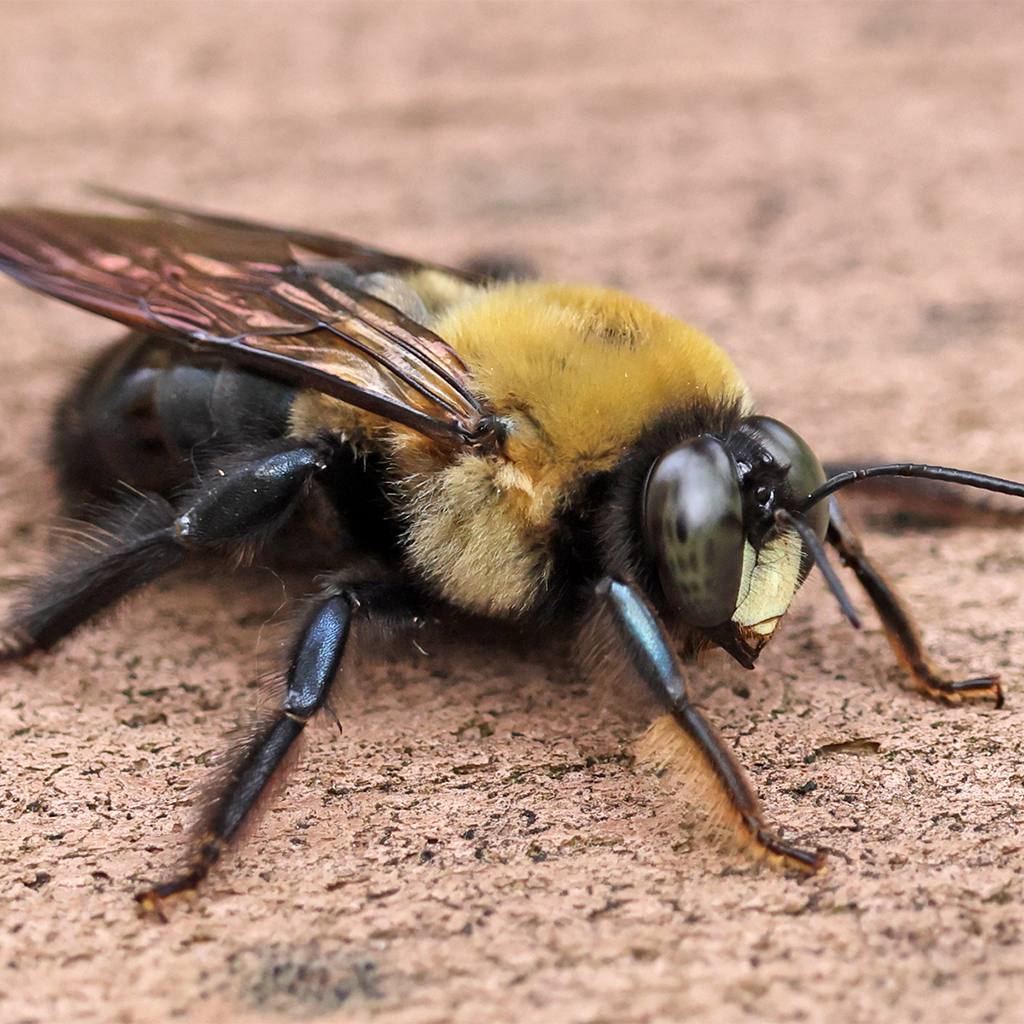
Carpenter bees are large, robust bees that drill perfectly round holes into wood for nesting. Unlike carpenter ants, they work alone or in small groups. Over time, repeated nesting in the same wood can cause cumulative structural damage to beams, door frames, and furniture.
Risk Level
Medium
Active Period
Year-round, active during daylight
Common Locations
Wooden structures, Door frames
Size
20–25mm
How to Identify Carpenter Bee
Physical Appearance
Large, robust bee, predominantly shiny black with a smooth, relatively hairless abdomen (unlike bumble bees which are fuzzy). Males may have a yellow or white face patch. Wings are dark and iridescent.
Size
20–25mm
Common Locations
Wooden structures, Door frames, Wooden furniture, Timber beams
Habitat & Behaviour
Activity & Breeding
Solitary nesters — each female drills her own tunnel into wood. Bores a perfectly round entry hole (about 10mm diameter), then turns 90° to create a gallery where eggs are laid in individual cells provisioned with pollen. Males are territorial but cannot sting.
Active Period
Year-round, active during daylight
Signs of Carpenter Bee Infestation
Health & Property Risks
Prevention Tips
Frequently Asked Questions
Other Bee Species
Need Help With Carpenter Bee?
Our experienced technicians can identify and eliminate carpenter bee infestations. Contact us for a free inspection and tailored treatment plan.