Pharaoh Ant
Monomorium pharaonis
The pharaoh ant is one of the most difficult household and commercial pests to control. Notorious in hospitals, hotels, and food facilities, it forms budding colonies that spread rapidly throughout buildings via pipe chases and electrical conduits.
Risk Level
Critical
Active Period
Year-round, 24-hour activity
Common Locations
Hospitals, Hotels
Size
1.5–2mm
How to Identify Pharaoh Ant
Physical Appearance
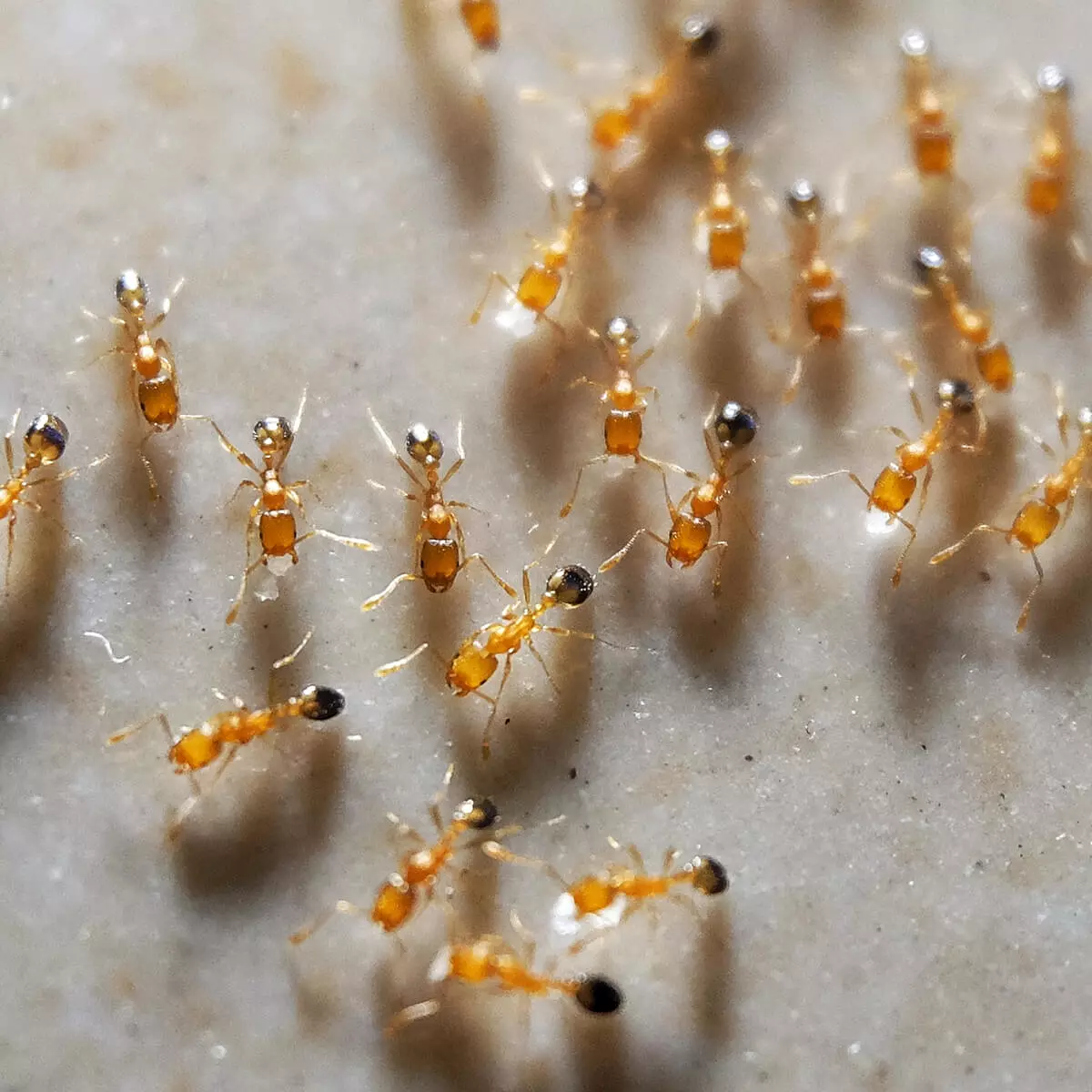
Very small, light yellow to amber-coloured ant with a slightly darker abdomen. Workers are uniform in size. Has a distinctive 12-segmented antenna with a 3-segmented club.
Size
1.5–2mm
Common Locations
Hospitals, Hotels, Commercial kitchens, Warm areas
Habitat & Behaviour
Activity & Breeding
Highly polygynous — colonies have multiple queens. Reproduces through budding: when disturbed, groups of workers and a queen split off to form new colonies. Prefers warm, humid environments near food and water. Trails through wall voids and pipe chases.
Active Period
Year-round, 24-hour activity
Signs of Pharaoh Ant Infestation
Health & Property Risks
Prevention Tips
Frequently Asked Questions
Other Ant Species
Need Help With Pharaoh Ant?
Our experienced technicians can identify and eliminate pharaoh ant infestations. Contact us for a free inspection and tailored treatment plan.