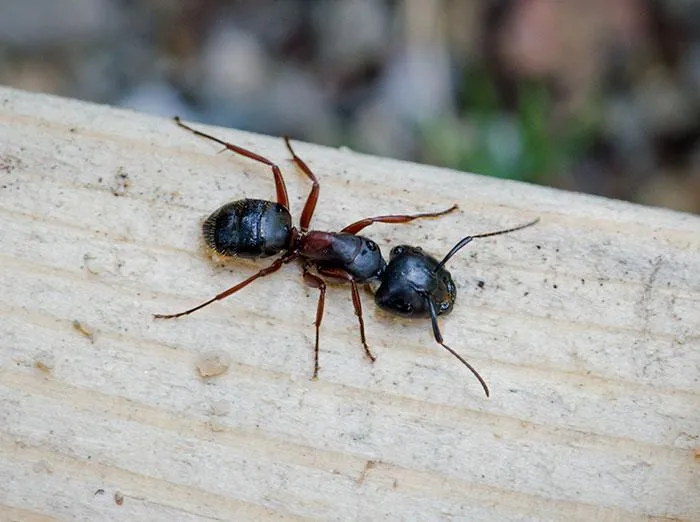
Carpenter Ant
Camponotus spp.
Carpenter ants are among the largest ants in Singapore. Unlike termites, they don't eat wood — they excavate it to create smooth-walled nesting galleries. Over time, this can cause significant structural damage to wooden beams, door frames, and furniture.
Risk Level
High
Active Period
Year-round, primarily nocturnal
Common Locations
Wooden structures, Door frames
Size
6–13mm (workers vary in size)
How to Identify Carpenter Ant
Physical Appearance
Large black or dark brown ant, sometimes with reddish-brown thorax. Has a smooth, evenly rounded thorax profile when viewed from the side — a key identifying feature. Workers vary significantly in size within the same colony.
Size
6–13mm (workers vary in size)
Common Locations
Wooden structures, Door frames, Trees near buildings, Roof spaces
Habitat & Behaviour
Activity & Breeding
Excavates wood to create nesting galleries but does not eat wood — feeds on sugary substances, insects, and protein. Prefers damp or damaged wood. Creates satellite colonies away from the main nest. Active foragers, especially at night.
Active Period
Year-round, primarily nocturnal
Signs of Carpenter Ant Infestation
Health & Property Risks
Prevention Tips
Frequently Asked Questions
Other Ant Species
Need Help With Carpenter Ant?
Our experienced technicians can identify and eliminate carpenter ant infestations. Contact us for a free inspection and tailored treatment plan.