
House Fly
Musca domestica
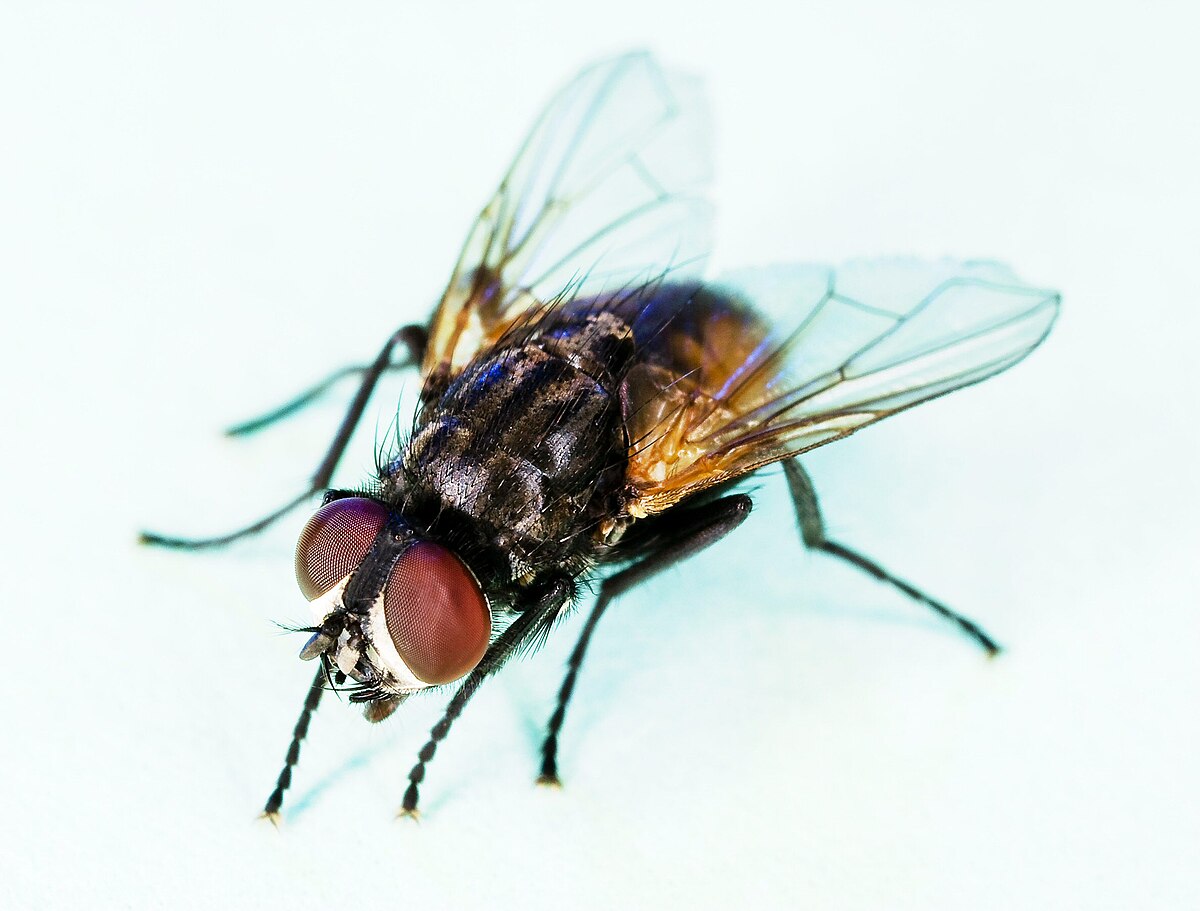
The most common fly species worldwide and a major disease vector in Singapore. Known for contaminating food through regurgitation and contact with faecal matter, house flies are a critical concern for food establishments.
Risk Level
Critical
Active Period
Year-round, most active in warm humid conditions
Common Locations
Kitchens, Restaurants
Size
6–7mm body length
How to Identify House Fly
Physical Appearance
Grey body with four dark longitudinal stripes on thorax. Large reddish-brown compound eyes. Sponging mouthparts designed for liquid feeding. Wings are clear with a slight yellowish tinge.
Size
6–7mm body length
Common Locations
Kitchens, Restaurants, Waste areas, Food processing facilities
Habitat & Behaviour
Activity & Breeding
Breeds in decaying organic matter, garbage, and animal faeces. Can travel up to 8km from breeding sites. Feeds by regurgitating digestive fluids onto food surfaces. A single female can lay up to 500 eggs in her lifetime.
Active Period
Year-round, most active in warm humid conditions
Signs of House Fly Infestation
Health & Property Risks
Prevention Tips
Frequently Asked Questions

Need Help With House Fly?
Our experienced technicians can identify and eliminate house fly infestations. Contact us for a free inspection and tailored treatment plan.