
Understanding Integrated Pest Management (IPM) for Businesses
By United Pest Editorial Team, Pest Management Specialist
Integrated Pest Management (IPM) has become the gold standard for commercial pest control worldwide. For businesses in food and beverage, hospitality, healthcare, and warehousing, IPM offers a smarter, more effective approach.
What Is IPM?
IPM is a science-based approach combining multiple strategies: prevention, monitoring, identification, treatment, and evaluation — while minimising risks to people and the environment.
The Four Pillars of IPM
1. Exclusion
Keeping pests out through sealing entry points, installing barriers, and maintaining building integrity.
2. Sanitation
Eliminating food, water, and shelter through waste management, cleaning protocols, and moisture control.
3. Monitoring
Regular inspections using traps, visual checks, and data analysis for early detection and trend tracking.
4. Treatment
Targeted, low-risk methods: mechanical controls, biological controls, and chemical controls only when necessary.
Benefits for Businesses
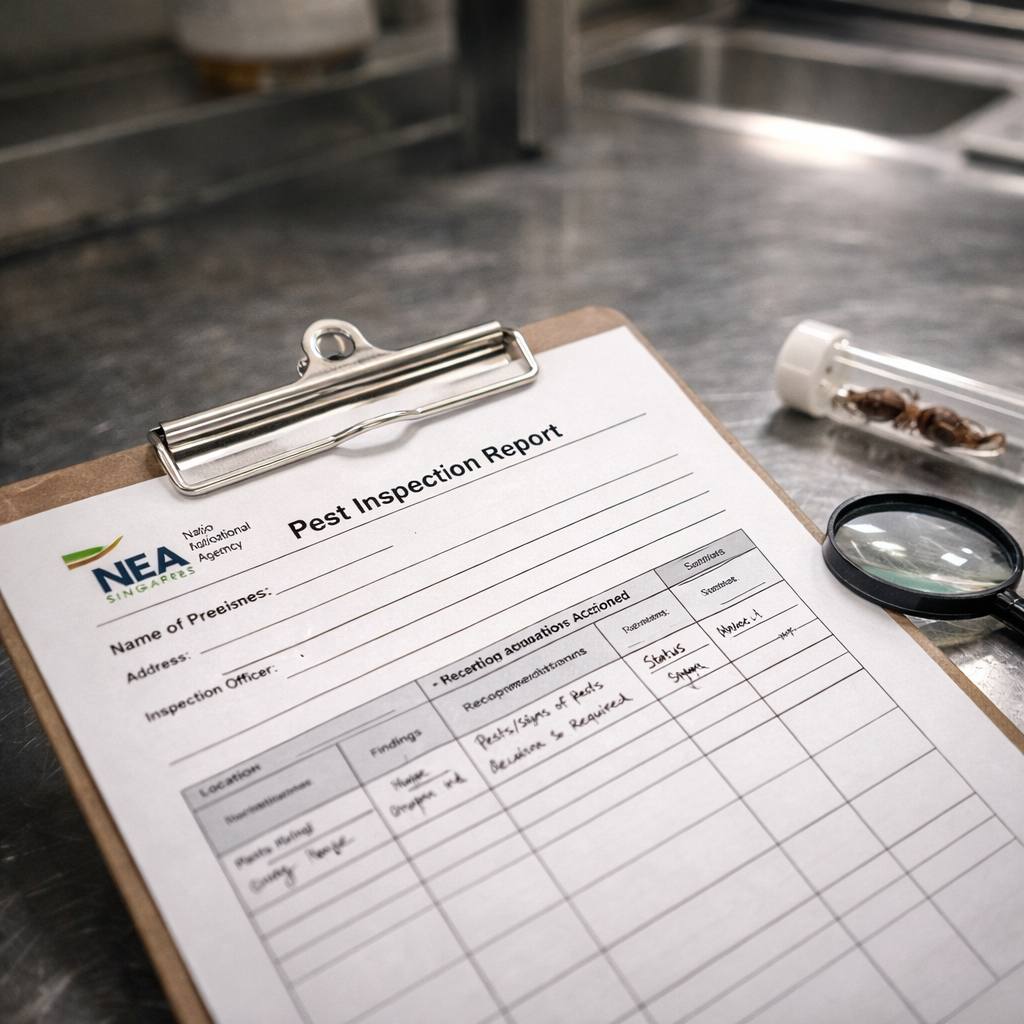
- Regulatory compliance — Aligns with NEA, HACCP, ISO 22000 requirements
- Cost effectiveness — Prevention costs less than emergency treatment
- Reduced chemical exposure — Safer for staff and customers
- Better results — Data-driven continuous improvement
Implementing IPM
- Assessment — Comprehensive site survey
- Planning — Customised IPM plan with clear objectives
- Staff training — Educate team on their role
- Implementation — Prevention measures and monitoring systems
- Review — Monthly data reviews and programme adjustments
Contact us for a complimentary IPM assessment of your business premises.